

If you’ve spent any time in modern cloud security, you’ve likely heard of Confidential Computing. It is often described as the “final frontier” of data privacy, allowing you to process sensitive data in a secure, isolated hardware environment known as a Trusted Execution Environment (TEE).
Recently, researchers published findings on a vulnerability called TEEfail. If you read the headlines, you might be worried. But what is it, how does it work, and should you stop using Confidential Computing?
The short answer is: No, you shouldn’t stop. Understanding TEEfail actually highlights why Confidential Computing is so effective.What is Confidential Computing? (The Meal Kit Analogy)
Your order at a restaurant with a delivery service
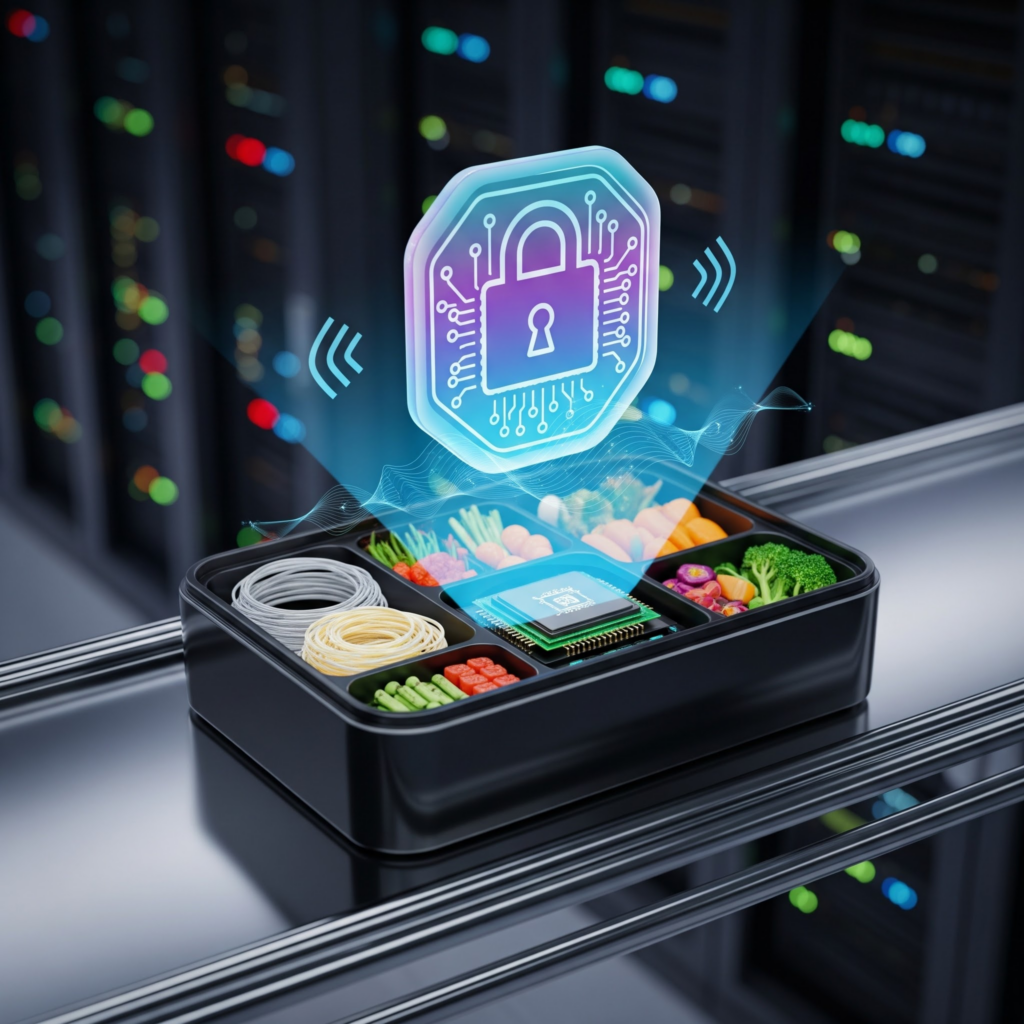
Imagine you order a high-end, gourmet meal kit. You want to ensure the ingredients are exactly what the recipe promised, and you want to be certain that no one—not the courier, not the delivery company, and not even the kitchen staff—has tampered with your food during the process.
- The Kitchen is the TEE: Your food is prepared in a special, locked kitchen (the TEE) where the chef (the processor) follows your exact, private recipe.
- The Seal is the Remote Attestation: Before the box leaves the kitchen, a “tamper-evident seal” is applied. This seal is digital, not physical. When you receive the box, you check the seal. If it’s broken, you know someone messed with the contents, and you reject it. If the seal is intact, you know the food inside was prepared exactly as the recipe specified, without anyone interfering along the way.
Confidential Computing applies this concept to data. It allows you to process sensitive information in a digital “sealed box,” ensuring that even the cloud provider—the “kitchen”—cannot see or alter the ingredients while they are being prepared.
What is TEEfail?
TEEfail is a research project demonstrating a way to challenge the security of these TEEs.
To understand it, we need to know about Remote Attestation. When you load a program into a secure TEE, the hardware provides a digital “receipt” or “fingerprint” to a remote server. This fingerprint proves that the environment is secure, un-tampered, and running exactly the code you expect. Think of this as the digital equivalent of checking that the seal on your meal kit is intact.
TEEfail is essentially an attempt to forge that seal.
How TEEfail Works: The “Fake Seal” Strategy
The researchers found that if an attacker has extreme physical control over the server hardware, they can try to trick the “remote attester” (the system checking the seal).
- Hardware Interposition: The attacker physically installs a “bridge” (an interposer) between the computer’s memory and the motherboard.
- The Goal: They aren’t breaking the encryption of your data directly. Instead, they are diverting the “evidence” (the seal) the hardware sends to the remote server.
- The Trick: They manipulate this evidence to make the remote server think the environment is running in a secure, confidential mode, when it is actually running in a compromised, unsecure state.
The Cloud Provider Problem: Why Even “Forced” Access is Almost Impossible
A common question is: What if the cloud provider is legally forced (e.g., under the U.S. CLOUD Act) to access a specific customer’s data?
Even if a cloud provider were under legal pressure to comply, the architecture of Confidential Computing makes this technically infeasible. Here is why:
- You Hold the Keys: In Confidential Computing, the encryption keys for encrypting the memory are generated inside the secure CPU enclave. The cloud provider never sees them, stores them, or handles them. They literally do not have the “combination to break the mealkit seal” they built.
- Hardware-Level Security: To comply with a request to access your data, the cloud provider would have to circumvent their own hardware security. They would need to physically enter their own data center, sabotage their own infrastructure, install interposers on their own servers, and most challenging re-engineer their entire software orchestration layer.
- The Logistical Nightmare: If a provider attempted to “target” one specific customer to extract specific data, they would face an impossible task. They would need to manipulate the scheduler to force your workload onto a specific, tampered server, successfully guess your Confidential VM (CVM) structure to forge attestation. And then to find the correct piece of data they need to repeat this for every instance you run because you cannot see what application is running in the TEE and with it what data is handled. This would require an internal, malicious “mission-impossible” heist—a massive, high-risk operation that is fundamentally at odds with how cloud infrastructure works.
Back to our generic scenario.
Why the Complexity Matters: A Logistical Nightmare
If this sounds like a scene from a spy movie, that’s because the real-world execution is extraordinarily difficult. While the research proves the theory works, moving from a lab to a real cloud data center is a massive logistical endeavor. Here are the levels of complexity that make this attack impractical:
- The Physical Hurdle: This is not a remote hack. An attacker must have physical access to the specific server inside a high-security data center, bypassing guards, biometric locks, and surveillance.
- The Orchestration Hijack: In a massive cloud center, workloads are dynamic and shift constantly. To guarantee that a specific customer’s data lands on a compromised server, the attacker would have to hijack the cloud provider’s entire orchestration software. This is a massive, multi-level attack on the cloud provider, not just a small exploit.
- The “Needle in a Haystack” Problem: Even if they compromised one server, the customer might be using multiple instances across dozens of servers. The attacker would have to compromise an entire cluster to ensure they capture the right data, all while avoiding the detection mechanisms built into modern cloud infrastructure.
The Bottom Line: Confidential Computing is still vital
By the time an attacker—or even a malicious insider at a cloud provider—has physically broken into a data center, installed custom hardware, and successfully hijacked the cloud provider’s scheduling systems, they would have likely found a thousand easier ways to steal data (like bribing an employee directly at the customer they want to get the data from).
The fact that TEEfail requires such extreme, physical, and targeted efforts proves how effective TEEs actually are. It raises the bar for an attacker from “easy remote hack” to “requires a mission-impossible-style heist.”
There are other ways to try to get into the memory. Most of them need access to the hardware, which just replicates the challenges described here. In the end it means:
Confidential Computing significantly increases your security posture. It forces an attacker to target you in the most difficult way imaginable, making your data safer than it ever was in a traditional virtual machine environment.
Start and if already on the way continue to use Confidential Computing to protect your sensitive workloads—it remains one of the most powerful tools in your security arsenal.